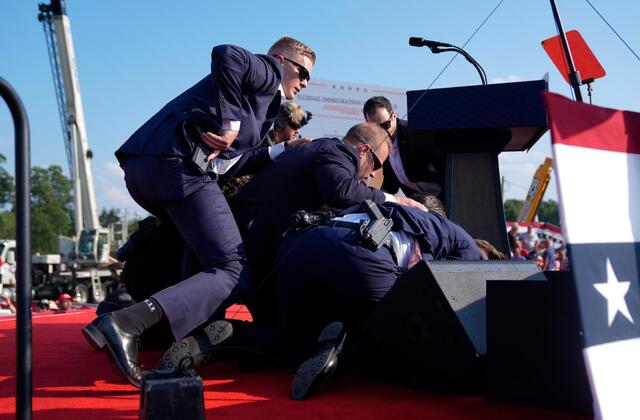
In a recent House Homeland Security Committee hearing, Rep. Michael Guest (R-MS) criticized the Secret Service for what he described as “abysmal” security failures during former President Donald Trump’s rally on July 13. According to Rep. Guest, these failures could have been mitigated or entirely avoided with the implementation of more advanced surveillance technologies, including the use of aerial drones, or “eyes in the skies.”
The Incident at the July 13 Trump Rally
The July 13 rally, held in Butler, Pennsylvania, was meant to be a demonstration of support for Trump’s ongoing political influence. However, the event was marred by security lapses that raised concerns about the Secret Service’s ability to protect high-profile political figures in volatile environments.
During the rally, an individual identified as John Matthews attempted to breach security and approach the stage where Trump was speaking. Although the Secret Service and local law enforcement officers managed to subdue Matthews before he could reach the former president, the incident highlighted significant gaps in the event’s security measures.
Rep. Michael Guest’s Criticism
Rep. Guest, a member of the House Homeland Security Committee, was vocal in his condemnation of the Secret Service’s handling of the event. “The security failures at the Trump rally were abysmal,” Guest stated during the hearing. “These lapses not only endangered the life of former President Trump but also the safety of everyone in attendance.”
Guest emphasized that the shortcomings could have been avoided with better use of technology. “The Secret Service needs to modernize its approach to security at large public events,” he said. “Having ‘eyes in the skies’ through the deployment of surveillance drones could provide a comprehensive view of the area, allowing for quicker identification and response to potential threats.”
The Role of Aerial Surveillance in Event Security
Aerial surveillance, particularly the use of drones, has become an increasingly valuable tool in ensuring the security of large public gatherings. Drones can offer several advantages:
- Enhanced Monitoring: Drones equipped with high-definition cameras can provide real-time footage of large areas, enabling security personnel to monitor crowds more effectively.
- Rapid Response: The mobility of drones allows for quick deployment to any part of the event area, aiding in the rapid assessment and response to potential threats.
- Cost-Effective: Compared to deploying large numbers of ground personnel, drones can be a more cost-effective solution for comprehensive surveillance.
- Deterrence: The presence of drones can act as a deterrent to individuals considering disruptive or harmful actions.
The Secret Service’s Response
In response to Rep. Guest’s criticisms, the Secret Service has acknowledged the challenges faced during the July 13 rally but defended its overall security strategy. “The protection of the President and other high-profile individuals is our highest priority,” said a Secret Service spokesperson. “While we constantly seek to improve our methods, it’s important to recognize the complexity of securing large, dynamic environments.”
The Secret Service also pointed to the quick response of their agents and local law enforcement in subduing Matthews as evidence of their effectiveness. “Our agents acted swiftly to neutralize the threat, ensuring the safety of the former President and attendees,” the spokesperson added.
The Need for Modernized Security Measures
Rep. Guest’s call for modernization reflects a broader debate about the future of security at political events. The use of drones and other advanced technologies is seen by many as a necessary evolution in response to increasingly sophisticated threats.
Advantages of Drone Surveillance
1. Comprehensive Coverage: Drones can cover vast areas that would be difficult to monitor solely with ground personnel. This ensures that no part of the event space is left unchecked.
2. Real-Time Data: The ability to transmit real-time footage to command centers allows for immediate assessment and decision-making, improving response times.
3. Flexibility: Drones can be equipped with various sensors, including thermal imaging and facial recognition technology, to enhance their surveillance capabilities.
4. Increased Safety: By providing an aerial perspective, drones reduce the need for placing security personnel in potentially hazardous situations.
Implementing Aerial Surveillance: Challenges and Considerations
While the benefits of drone surveillance are clear, implementing such technology comes with its own set of challenges:
1. Regulatory Hurdles: The use of drones is subject to strict regulations by bodies such as the Federal Aviation Administration (FAA). Ensuring compliance with these regulations is crucial.
2. Privacy Concerns: The use of surveillance drones raises concerns about privacy, particularly in public spaces. Balancing security needs with the protection of individual privacy rights is essential.
3. Technical Limitations: Drones are susceptible to technical issues such as signal interference and battery limitations. Ensuring reliable operation is vital for their effectiveness.
4. Training and Integration: Security personnel need proper training to operate drones effectively and integrate them into existing security protocols.
Political Reactions and Public Opinion
The debate over the Secret Service’s performance and the potential for drone surveillance has sparked varied reactions from political figures and the public.
Support for Modernization: Many lawmakers, particularly those focused on security and technology, have expressed support for Rep. Guest’s proposals. “We need to leverage every tool available to ensure the safety of our leaders and citizens,” said one lawmaker.
Concerns Over Surveillance: Conversely, some civil liberties advocates have raised concerns about the implications of increased surveillance. “While security is important, we must be vigilant about protecting individual privacy rights,” said a spokesperson for a privacy advocacy group.
Public Sentiment: Public opinion appears divided. While many citizens appreciate the need for enhanced security, there is also apprehension about the potential overreach of surveillance technologies.
Moving Forward: Recommendations and Next Steps
In light of the recent criticisms and the ongoing debate, several recommendations have emerged to improve the security of large public events:
1. Pilot Programs: Implementing pilot programs for drone surveillance at select events can help assess their effectiveness and address any operational challenges.
2. Legislative Support: Passing legislation that supports the responsible use of drones for security purposes while ensuring compliance with privacy regulations.
3. Interagency Collaboration: Enhancing collaboration between federal, state, and local law enforcement agencies to ensure a coordinated approach to event security.
4. Public Engagement: Engaging with the public to educate them about the benefits and limitations of drone surveillance and addressing their concerns about privacy.
The security failures at the July 13 Trump rally have highlighted the need for modernization in event security protocols. Rep. Michael Guest’s call for the implementation of aerial surveillance technologies, such as drones, presents a compelling case for leveraging advanced tools to enhance safety.
While challenges remain, including regulatory and privacy concerns, the potential benefits of drone surveillance in providing comprehensive, real-time coverage are significant. Moving forward, a balanced approach that incorporates these technologies while respecting individual rights will be essential in ensuring the safety of public events and high-profile figures.
Leave a Reply